Rinse and Repeat
Why do people regurgitate the same mistruths about "Wicca"?

The beating of the chest to announce the arrival of a new blog aroused my interest the other day, only to result in disappointment. Not only was it the same misinformation and half truths being repackaged to fit a modern audience, but the writer decided to deepen what was apparent their dislike of a spiritual tradition with the accusations of what was taught being based on nothing but “lies”.
Their claim, not to mention choice of words, is somewhat puzzling. The very description of their own spiritual path had little relevance to the topic they felt they were qualified to “critique”. As such, this left me wondering what was the motive behind their decision to unleash such a rant upon the world?
Had they in fact discovered a hidden truth, overlooked by past researchers? Or was it a personal encounter that tipped them over the edge?

The blog post, The Lie of “Harm None”: How We Sanded the Teeth Off Witchcraft, is self-described as a so-called “constructive and thoughtful critique” of what has become probably one of the most misunderstood phases relating to the modern revival and perceptions of witchcraft, in particular Wicca ~ that being “harm none”.
A broad assertion is made of this now shortened version of the Wiccan Rede that it is, in fact, allegedly nothing but a bunch of lies.
Once again, we are told that Gerald Gardner made everything up ~ alluding to the fact that he lied about the New Forest coven into which he claimed to be initiated.
The author takes his claims a step further in allegedly asserting Doreen Valiente, who first used the above phrase in public, is also tarred with the same brush, that being a liar.
But based on what?
The author of the critique further boldly states the modern witchcraft, that being Wicca, almost purposefully used the Rede as a way of “mis-translating” witchcraft so that it would fit into a then deeply Christian world as a new religion. They also announce that the “Wiccan Rede didn’t descend from some ancient lineage of cunning folk whispering ethics”.
Such “critiques” are not new. There have been many over the years, and while each may take a different dig, they do have one thing in common ~ a simple lack of fact.
There are also many a person within the so-called “stang gang” (i.e., traditional witchcraft) who seek to distance themselves from what is called Wicca today ~ especially the modern interpretation that, in all honesty, aligns more closely with the works of Scott Cunningham’s Wicca: A Guide to the Solitary Practitioner than anything actually put forward by Gardner, Valiente et al.
However, each to their own.
What has ruffled my feathers about this particular article is the unfounded accusation that everything, from Gardner to Valiente, is nothing more than a bunch of carefully conceived lies ~ yet offering no actual proof, beyond personal opinion clearly influenced by decades of misinterpretations.
Further, the mild curiosity as to why would someone, who describes themselves as “Brythonic Druid”, not only is getting themselves all worked up about another tradition’s underlying guiding markers (regardless of whether they agree with them or not), but feel they have the right and qualifications to lecture their insights?
Maybe this is a sign of the world we live in today ~ where everyone has an opinion to be shared regardless of the accuracy involved.
As someone who may have some degree of knowledge and insight into Wicca, in particular contemporary or initiatory witchcraft that stems from Gardner’s teachings, I thought I would share a few things about this “critique” that I personally disagree with.
Well, I have limited myself to four.
Let us begin.
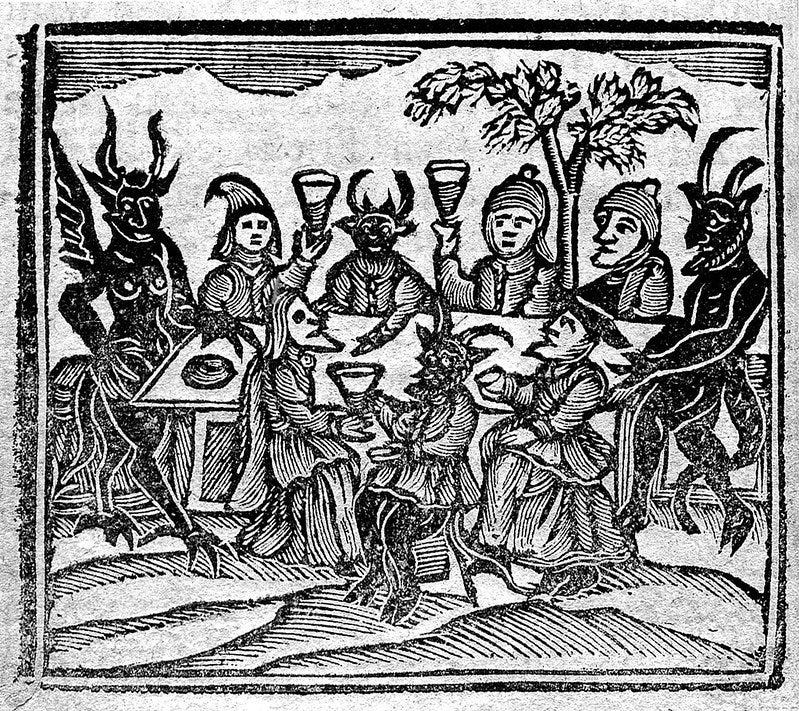
1. The heading itself ~ The Lie of “Harm None”: How We Sanded the Teeth Off Witchcraft
To “lie”, according to the dictionary, is to purposely make a false statement to intentionally deceive or mislead, or the act of telling such an untruth. It is a deliberate untruth designed to hide the truth, often conveying a false impression.
This attention grabbing heading itself could actually be interpreted as the very thing it is “critiquing” ~ that, in fact, it is a lie. I make this bold claim based on the simple lack of actual evidence put forward by the author that Gardner, Valiente et al intentionally or deliberately set out to deceive others.
From the outset, Gardner claimed to have been initiated into a group of “witches”. That was indeed what they called themselves.
Evidence of this involvement has been undertaken by Philip Heselton who, over the decades of meticulous research, has produced a number of books, proving not only the existence of the New Forest coven, but also what could be interpreted as the influence that the New Thought movement of the 19th century had on the spiritual landscape as a whole.
Did Gardner purposely desire to deceive people with his “made up” religion? Those who knew him, and who worked with him, have all stated that he genuinely believed that what he was initiated into, and therefore what he set out to ensure did not disappear, was witchcraft.
It may not have been “witchcraft” as perceived through the lens of some people today. That however does not make it any less so. Just different.
Interviews undertaken by Gardner at the time do not show a man attempting to curtail, let alone soften anything in order for it to be accepted by Christian ideologies.
As to the claim of teeth being sanded off, well, I guess the author is not aware of, has forgotten about, or even has chosen to dismiss the "Cone of Power" ritual that took place on Lammas Eve in 1940 to prevent Hitler’s invasion of Britain.
Then again, as there is limited “proof” of such an event occurring (as is usually the case as acts of magic undertaken within a circle are rarely spoken about in the general public), this provides space for detractors to simply dismiss it as some kind of old man’s fantasy.

2. The assertion that “An it harm none, do what ye will” sounds gentle
When taken on face value, this is indeed the common misinterpretation of this phrase, especially when a deeper level of contemplation is not engaged.
Known as the “Wiccan Rede”, these eight words clearly advises the person, i.e., someone pertaining to the Wiccan tradition, of what to do when one’s actions may cause no harm to others. What it does not is make mention of what to do should one’s actions could cause harm.
This omission has, for some reason, given rise to the perception that this phase can be reduced to “harm none”, as it is done by the author in the title of their critique. Yet, in doing so, such interpretation completely changes the meaning ~ moving it from a form of guidance to that of a command, an order.
Yet, such a shortened interpretation is contrary to what the word rede even itself means ~ that being “to counsel, advise, or interpret”.
Nothing is recorded about it being some kind of law etched on stone tablets.
This, in itself, is ignored by the writer of the critique ~ possibly because it provides further ammunition for the claims they are making.
While I go into more detail about the Wiccan Rede and how it could be included in one’s life in my book, Contemporary Witchcraft, I would like to mention here that the origins of the misinterpretation, not to mention misuse, of this eight worded phrase today is largely due to folks who have never been initiated into Gardner’s style of witchcraft .
This is one of the common criticisms directed at “Wicca” (or contemporary witchcraft) by followers of “traditional witchcraft” (allegedly having no connection with Gardner): that Wicca is soft and all love and light, whereas traditional witchcraft has teeth.
What such critics fail to acknowledge that the majority of what is portrayed as “Wicca” today, as I have just mentioned, has little, if any, resemblance to that of Gardner. In fact, Wicca seemed to be an initial catch-all phrase for what was once described as “pagan” some 20 or 30 years ago. Likewise today, “witchcraft” seems to be used as a catch-all phrase with a focus revolving around crystal collecting, pseudo-conjure practices and moon manifesting ~ definitely no “teeth” there in my opinion.
But I digress.
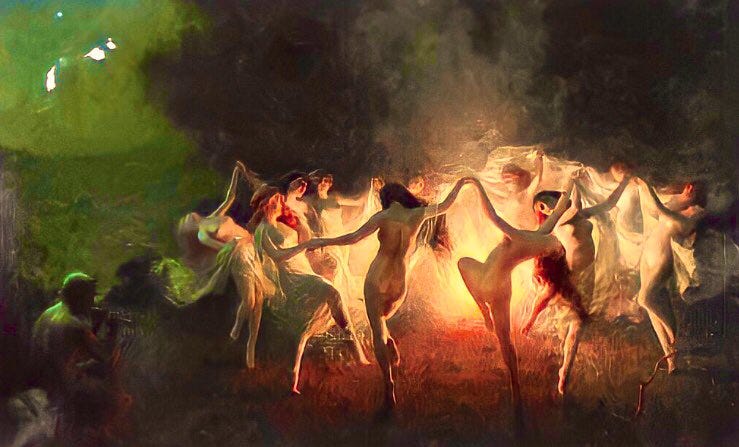
3. The use of “Harm None” flattens witchcraft into something palatable and safe
This follows on from what I have mentioned above ~ the problems caused when a phrase is deduced, taken out of context, and then interpreted merely on face value.
Again, the Wiccan Rede does not imply one should never cause harm. It certainly does not “subtly” or otherwise suggest that “anger is unspiritual, that justice must always be gentle”, and that “power should never have a bite” as claimed by the author.
Such statements again seem to be personal opinions, possibly based on being subjected to misinterpreted usage as opposed to obtained from speaking with an initiate, or themselves undergoing initiation into this tradition.
Likewise, the alleged claim that “harm none” is perceived as some kind of universal law ”to impose a morality shaped by comfort onto traditions born of discomfort, pain and rebellion”.
This interpretation is not only news to me, but almost laughable that initiatory, or contemporary, witchcraft is being perceived as dismissing or even devoid of any “discomfort, pain and rebellion”.
While I can only speak for myself, and indeed this whole article contain my own thoughts and by no way reflect anyone else’s, I do find it amusing that the author appears to have ignorant of the fact that within initiatory or contemporary witchcraft there is indeed a history of rebellion.
From the outset.
Dating as far back to, at least, Gardner ~ of which is documented.
Rebellion was to worship a Goddess, the divine feminine, in a Christian society where there only a divine masculine.
Rebellion was to elevate women into places of religious leadership ~ something that orthodox religions still struggle with today.
Rebellion was to go naked in a society that was still heavily based on Victorian perceptions of alleged morality.
Rebellion was even to venture out into nature in the middle of the night, into the complete darkness, into the unknown.
We may not see these as forms of “rebellion” today however at the very time that witchcraft was starting to emerge from the shadows again, these were definitely signs of rebellion.
Even today, the thought of being sky-clad, naked within a sacred circle, causes a degree of discomfort and anxiety to many people.
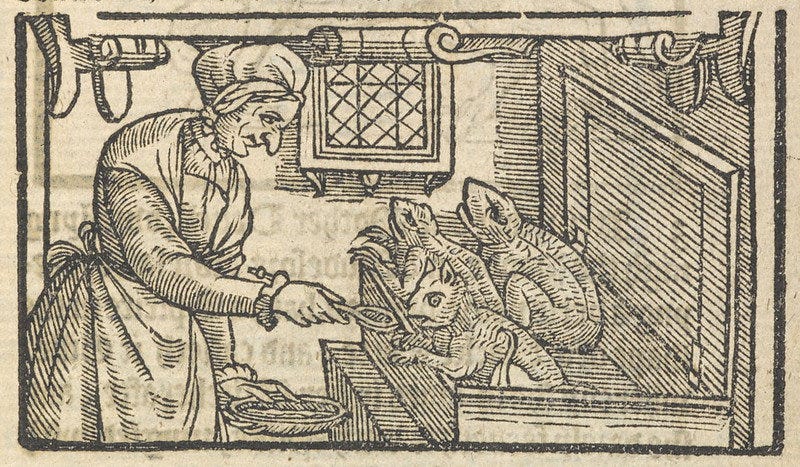
4. The assertion that the Wiccan Rede descended from some ancient lineage of cunning folk whispering ethic
This is a rather interesting claim because I have personally never heard any such claim about the origins of the Wiccan Rede. Again, it is unfortunate that the author again fails to provide any evidence to back up their claim alluding to the possibility that maybe it was comment made, a misguided post or ascertain on social media, and the like.
The first published form of the couplet, “Eight words the Wiccan Rede fulfill, An it harm none do what ye will”, appeared in a pagan newsletter, The Pentagram, in 1964, of a speech Doreen Valiente had made earlier. As far as I am aware, it is not known where Valiente obtained this couplet from.
Then there is the "Rede of the Wiccae", published in the American Green Egg magazine in 1974 attributed by Lady Gwen Thompson, who ascribed it to her grandmother Adriana Porter. This “longer rede” consists of verses pertaining to rural practices of New England from the 17th to 19th century.
Are the two related? Some are indeed of that opinion due to there being a time overlap. However, what of the claim of it being some “ancient lineage of cunning folk whispering ethic”?
I am none the wiser.
If anyone could shed any light on this alleged claim, in particularly how it relates to Gerald Gardner or Doreen Valiente, I would be most interested.
Summary
So many words used, yet many questions remain as to why the author wrote the critique in the manner in which they did. More so when you consider, as I mentioned earlier, they describe themselves as a “Brythonic Druid” ~ this, in and of itself, is a reconstruction of alleged practices relating to a priestly class in ancient Celtic cultures.
It is beyond me as to why people who claim to have little, if any, interest in the style of witchcraft that Gardner, Valiente and others have brought into the world, seem so fixated on uncovering any potential flaw or failing, especially from the modern perspective.
It is disappointing that a purported “critique” is nothing more than a further attempt to discredit initiatory witchcraft (or Wicca), and that the ammunition being used is actually as “toothless” as the claimed damage.
It is one thing to ascertain fact from fiction.
It is another thing to wield accusations of “lies” and to make exaggerated claims based on little factual evidence, or worse, personal grievances.
But again, each to their own.
Following on from my initial post, a scanned copy of “Pentagram” can be found here where it includes Doreen Valiente’s speech: https://www.thewica.co.uk/_files/ugd/4f0e4f_ee2b49b033eb43888910a95e89e7d230.pdf?index=true.
In her speech, Valiente makes mention of Gardner:
“I do not by any means agree with all that Gerald Gardner said or did; but I recognise his great qualities of heart and mind, as did all who knew him. He was a personality and a character, and we shall remember him with affection.”
She also mentions the Rede:
“I think we have earned the right to proclaim the old teaching of tolerance and freedom, and mutual respect, which is contained in the saying called the Wiccan Rede. "Wiccan" is the AngloSaxon plural of "wicce"; and "Rede " means counsel or teaching:
Eight words the Wiccan Rede fulfil: An' it harm none, do what ye will.
This is a simple, positive moral code.”
Is this the alleged “lie” that Walsh was referring to in his so-called critique of implying that the Rede was “ancient“?
The words the Valiente actually used were “old teaching”. What did she mean by this? The newsletter was published in 1964 and Valiente’s involvement with Gardner was from 1953 to 1957.
Alternatively, in providing meaning to the words “Wiccan” and “Rede”, had Walsh interpretated this as Valiente implying that the Rede was Anglo-Saxon?
As Valiente passed through the veil in 1999, we probably will never know.